Tuesday, April 16, 2019

Pink Floyd Tribute, Wish You Were Here, rocks Jackson


Wish You Were Here, the Cleveland, Ohio-based Pink Floyd Tribute Band brought a night of hits, fan favorites, and deep cuts to Jackson’s Michigan Theater earlier this month and delighted the uninitiated and hard-core Floyd followers alike. WYWH have been at it for nearly 25 years and had not performed in Michigan in quite some time, so it was exciting to see them visit their neighbors to the north, whom they thrilled with an engaging light and laser show, props, costumes, and stage settings, and spot-on performances of many Pink Floyd classics, including a healthy dose of The Wall, celebrating it’s 40th anniversary this year. While some area fans have been enjoying Michigan’s own Floyd tribute band, Echoes of Pink Floyd, and their recent annual visits to the Michigan Theater, it was nice to see and hear another veteran group of dedicated fans bring Floyd’s songs to the historic Jackson venue.


 Like many other Floyd tribute acts, Wish You Were Here structure their show with the same style and pacing of an actual Pink Floyd concert, with two full sets that have an intermission between them, followed by an encore to end the night.  Pink Floyd came up with this arrangement around the time they began performing songs from what would become Dark Side of the Moon and continued with it until retiring from live performances in 1994. The band consisted of up to 9 people on stage at a time, including two female backing vocalists and additional musicians who alternated between guitar, saxophone, percussion, and additional vocals as needed. Each did very well to represent their position and parts in each song, though the house mix could have brought the guitars and vocals up and reduced the volume on the drums, just a bit. One element unique to WYWH compared to other Floyd tributes is their inclusion of certain deep cuts that most others do not include, such as “Remember a Day”, from the 1968 album, A Saucerful of Secrets, which was included early in the show as a tribute to both Syd Barrett and Richard Wright (the two late members of Pink Floyd), and later-era favorites like “On the Turning Away” and “Coming Back to Life”, from Floyd’s late ‘80s/early ‘90s incarnation, helmed by guitarist/vocalist, David Gilmour.


Other notable and unexpected tracks included “Pigs on the Wing (pt. 1)” and “Dogs” from Animals to open the second set, and a beautiful transition from the very well-known, “Wish You Were Here”, to the Meddle fan-favorite, “Fearless” near the end of the show. A fair amount of attention was given to songs from Floyd’s biggest albums, Dark Side of the Moon and The Wall, as usual, but WYWH had fun with the arrangements, extending or amending sections of certain songs here and there, and they entertained themselves as well as the audience by performing sections of songs with complete or nearly complete sides of those albums, most notably sides one and three of The Wall.


 Overall, Wish You Were Here brought a professional, well-rehearsed concert to Jackson that featured engaging songs, performance, and visuals to a respectful audience that blended young and old, fans and beginners, and hopefully, they will visit Michigan to perform again before another decade or more passes!

Wish You Were Here set list:
Shine on You Crazy Diamond (pts. 1-5)
Remember a Day
(“Bike” end section only/transition)
In the Flesh?
The Thin Ice
Another Brick in the Wall (pt. 1)
The Happiest Days of Our Lives
Another Brick in the Wall (pt. 2)
Mother
(“Speak to Me” + samples/transition)
Breathe
Time
Breathe (reprise)
The Great Gig in the Sky
Goodbye Blue Sky
Empty Spaces (pt. 1)
Young Lust
On the Turning Away
---------------------------------(intermission)-------
Pigs on the Wing (pt. 1)
Dogs
Money
One of These Days
(sample montage/transition)
Hey You
Is There Anybody Out There?
Nobody Home
Coming Back to Life
Wish You Were Here
Fearless
Run Like Hell
Comfortably Numb
------------------------------(encore break)--------
Brain Damage
Eclipse
-----------------------------------------------------

Saturday, April 6, 2019

25 Years Later: Remembering Kurt Cobain


Kurt Cobain, songwriter, singer, and guitarist for Nirvana, and accomplished multi-media artist in his own right, left this mortal plane 25 years ago yesterday, on April 5th, 1994.  His work, his life, and its tragic end have been studied and analyzed since the day he died, and many theories and discussions with a range of validity and accuracy have been had and continue even now. Rather than revisiting the timeline of his final days or discussing drama with his family or band mates, I would just like to take a few moments to share my own thoughts and feelings, as Cobain truly introduced me to the world of modern rock music and culture, inspired me to become a musician, to attempt song writing, and to form many bands. If not for him and his music and art, my life, personally, and the lives of countless people around the world, could have been very different.

People remember where they were when they heard Cobain had died the way they remember hearing about John Lennon or even JFK, depending on their age. I was on a spring break trip to Washington D.C. with my dad and brother, and while I had only been introduced to Cobain’s music two-and-a-half years prior, with the release of “Smells Like Teen Spirit”, I understood his passing had a massive weight and gravity to it. After digging in to Nirvana’s catalog, many bootlegs, and several books about Cobain that were published during and after the time of his passing, I discovered more depth, talent, and creativity than I ever expected, and along the way, it became very clear to me how significant Cobain was to the evolution of rock music, gen-x culture, and as a representative of his audience.


Kurt Cobain was an absolute enigma of a person.

He was known to say one thing but do another, for lack of a better phrase, almost his whole life, and this appeared in his songwriting and lyrical contradictions and in the way he managed Nirvana’s image compared to how he truly felt about how their work was being presented, on recordings, on stage, and in music videos. Cobain seemingly loved most animals and hated most people, but he had deep bonds with friends and family throughout his life as well, in addition to starting a family of his own. He demanded privacy but also craved attention. He dismissed things others deemed important and held what some might regard as useless in very high esteem. He was staunchly pro-choice and a champion of women's rights and especially gay rights at a time when being so was still viewed as controversial by some.

While he only reached the age of 27, he explored all corners of art to express his ideas.  In addition to writing music and lyrics, Cobain was an avid painter, both on canvas and with graffiti art, and experimented with collage art, including print-based, video tape, and audio tape projects. Cobain was also an avid collector of old toys and junk he would find at garage sales and flea markets, sometimes using some of these pieces in his art projects. Occasionally, some of them were even featured in Nirvana artwork or were lyrically referenced in one of their songs.


 As a songwriter, Cobain is best known for Nirvana’s biggest hits, aside from “Teen Spirit”, such as “Come as You Are”, “In Bloom”, “Lithium”, “Heart-Shaped Box,” and “All Apologies”. The band only created three albums, 1989’s Bleach, 1991’s Nevermind, and 1993’s In Utero, yet their cemented legacy is a permanent staple of rock radio and iconic representation of early 90’s pop culture. In addition to Nirvana, Cobain attempted additional projects with other friends which never got off the ground, most-notably, The Jury, with members of Screaming Trees. Cobain also experimented with home recordings, tape manipulation, sampling records from his personal collection, and creating shrieking noise and feedback with his guitar, which also happened in professional recording studios and onstage alike. Inspired and influenced by the cornerstones of punk, metal, pop, and classic rock, Cobain’s work reflected 30+ years of rock history from a disillusioned, 90’s perspective, and sometimes, his reflections were not always well-received or well-intentioned.

Kurt Cobain’s influence is immeasurable. Aside from the millions of fans of his music around the globe, both during his final years of life and since his death, the fact that he inspired so many to pick up an instrument, write a song, or start a band means that even non-fans still encounter his spirit, sound, or style when they see or hear some of the artists they may love the most. He holds a place on the rock and roll history timeline among the likes of Chuck Berry, Elvis Presley, The Beatles, Jimi Hendrix, Led Zeppelin, Black Sabbath, and Ramones, among the other greats. He is arguably not only the final major rock star of the 20th century, but possibly ever, which is its own sad addition to his story, in a way.


Cobain means so much to so many because he introduced people to rock music that existed outside the ‘70s and ‘80s mainstream of pop, classic rock, and especially hair metal, when those very styles of music had previously dominated the charts for over a decade. There were younger people playing, listening to, and buying rock music, and MTV and radio alike took notice after the smash success of “Smells Like Teen Spirit”. This allowed the world to be introduced to a whole generation of grunge and alternative rock music that came in waves each year in the early ‘90s and stopped about a year or two after Cobain’s death, not-coincidentally. He made punk rock music, fashion, and attitude marketable and big business after its dismissal and disregard going back nearly 20 years prior to Nirvana. While many regard Cobain as the voice of his generation, akin to Bob Dylan or John Lennon in the ‘60s, he is notably a classic rock archetype. He represents the same rebellion, youthful energy, and lust for freedom that all the great rock artists from the ‘50s on also represent, but from his own time, place, and perspective. He is regarded as a guitar hero, as a genius songwriter, as an experimental musician, and as the most significant individual person in rock music over the past 30 years (or longer). His songwriting, performance, and production styles were imitated for over a decade after his passing and still make up a portion of rock music that is recorded and released today. Above all, Kurt Cobain’s music and lyrics appeared to be honest and sincere within the context of his art, and they represented his thoughts, feelings, and outlook in a way that listeners, especially of his age and younger, could understand and to which they could relate. He was up there representing you.  Your thoughts. Your feelings. Your emotions. As long as rock music, distorted electric guitars, and angsty teens still exist, Cobain and his influence will always continue.


Friday, March 22, 2019

Weezer and Pixies Rock Grand Rapids


Nerdy nostalgia took over Van Andel Arena in Grand Rapids Wednesday night as alternative rock mainstays, Weezer, and elder statesmen, Pixies, brought their US tour through Michigan. Hits and history alike were the focus of the night, rather than an emphasis on newer material, though Weezer included a fair amount of cover songs from their self-titled (teal) album, released earlier this year (yet only one from their self-titled (black) album, released just a few weeks ago). The crowd was a blend of older fans who were there for Pixies with mild interest to indifference toward seeing Weezer, and younger fans who felt and reacted the opposite way, though most seemed to enjoy the sets from both bands.


The production for each group was professional and well-executed but quite different when comparing. After a short opening set from Basement, Pixies took the stage to the sounds of The Beatles’ later-era B-side, “You Know My Name (look up the number”, and launched right into “Where Is My Mind?”, one of the most-notable and influential songs, followed by another early classic, “Nimrod’s Son”, before veering off into a segment of newer material from the current decade. Singer/guitarist/songwriter, Black Francis, led the band through tight performances of 22 songs in 70 minutes, bringing new life to old favorites as the group experimented with arrangements and tempos throughout their show. While still able to hit most of the tougher, higher notes, Francis’ voice is gruffer and more gravely than the band’s original recordings from 30 years ago. Bassist/vocalist, Paz Lenchantin, replacing departed founding member, Kim Deal, did well to replicate Deal’s bass parts and most of her signature vocals, and she got a few minutes in the spotlight later in the set singing lead on a spirited rendition of “Gigantic”. While it would be impossible to include all of the band’s greatest hits and fan favorites in their slightly-shorter set time, and considering their surprise reunion tour was, itself, 15 years ago, the modern version of the band did a great job balancing older and newer material alike and presenting each song with passion and well-rehearsed skill. Other classic songs that were featured included “Here Comes Your Man”, “Gouge Away”, “Hey”, “Caribou”, “U-Mass”, “Wave of Mutilation”, and “Debaser”.


After another set change, slightly longer than the first, fans were delighted to see Weezer emerge from behind a large curtain that surrounded the stage, wearing the matching, striped jackets and hats they recently sported on an episode of The Tonight Show, and again performing a barbershop quartet arrangement of the first verse and chorus of “Buddy Holly”. They then ducked back behind the curtain to begin the show, proper, and the band started off with a strong 5-song punch of tracks from their first two (and best) albums, including “My Name is Jonas”, “Pink Triangle”, “El Scorcho”, and the full-length “Buddy Holly”. A few songs including, “Undone-The Sweater Song”, “I Want You To”, “Pork and Beans”, and “Beverly Hills”, were shortened for time or featured alternate lyrics, usually changed for comedic effect, but with some lines left out completely in a few cases. Over the course of the show, the backdrop and stage design changed every 5 songs or so, keeping things visually engaging and different from one block of songs to the next. One stage set resembled the “Buddy Holly” music video while another resembled a garage band practice, and later in the show, everything from brightly-lit disco balls to classic-metal flash pots were used to accompany the various moods in the songs that were included.


About half-way through their set, front man, Rivers Cuomo, boarded a small prop boat that was wheeled slowly around the outer rim of the main floor, allowing the guitarist to perform solos to audience members who were further away from the stage. During this portion of the show, Cuomo performed two songs on his own with only an acoustic guitar, including Weezer’s mid-00’s minor hit, “Perfect Situation” and a cover of The Turtles’ classic, “Happy Together”, which also included a verse and chorus from Green Day’s “Longview”, itself celebrating a 25th anniversary this year, along with Weezer’s self-titled debut LP (blue album), both released in early 1994. Among the 7 (!!!) cover songs that were played or referenced throughout their performance, most of which were from their recent covers album, most notable was a nearly-perfect take on Jane’s Addiction’s, “Up the Beach”, the opening track from Nothing’s Shocking. The track is more an atmospheric introduction or transition than a proper rock song, and most in the audience probably didn’t really notice it or even know what it was, but it was a very notable choice for the band to include. Also played were TLC’s “No Scrubs”, Black Sabbath’s “Paranoid” (with guitarist Brian Bell on lead vocals), and their two recent ‘80s cover hits, “Africa” and “Take on Me”, celebrating almost all corners and decades of the rock ‘n roll timeline. By comparison, they included no songs at all from 6 of their own 14 albums. Even when the band stumbled at times, or when planned parts of the show didn’t quite play out right, their performance was charmingly awkward, much like the group itself. Fans and newcomers alike were dazzled by Weezer’s showmanship and responded well to their proud-geek spirit. And so, a random Wednesday evening in Grand Rapids concluded with a triumphant “Say It Ain’t So” as the smiling and satisfied audience headed back into the Michigan non-spring evening.

Pixies Set List
(The Beatles “You Know My Name” intro tape)
Where Is My Mind?
Nimrod’s Son
All the Saints
Here Comes Your Man
Death Horizon
Mr. Grieves
*(still working to verify which song was played here)
Cactus
Motorway to Roswell
Gouge Away
Blown Away
*(still working to verify which song was played here)
Hey
Caribou
Saint Nazaire
Head On (The Jesus and Mary Chain)
U-Mass
Gigantic
Wave of Mutilation
Debaser
Vamos
Winterlong (Neil Young)
***********************************

Weezer Set List
Buddy Holly (barbershop quartet)
----------
(Happy Days intro tape)
My Name is Jonas
Pink Triangle
El Scorcho
Buddy Holly
Undone-The Sweater Song
(If You’re Wondering If I Want You To,) I Want You To
Pork and Beans
Can’t Knock the Hustle
Paranoid (Black Sabbath)
-----------
Perfect Situation (Rivers solo)
Happy Together (The Turtles)/Longview (Green Day) (Rivers solo)
-----------
Up the Beach (Jane’s Addiction)
Beverly Hills
Surf Wax America
No Scrubs (TLC)
Island in the Sun
Africa (Toto)
Hash Pipe
-------------------(encore break)-----------
Take on Me (A-Ha)
Say It Ain’t So
******************************

Friday, March 15, 2019

Dookie at 25


Green Day’s major label debut introduced the pop punk trio to audiences around the world and made them one of the most successful rock bands of the 1990s. Dookie, released in early 1994, established a next-generation take on the classic sounds of Ramones, Sex Pistols, and others, but included enough hooks to propel 5 hit singles up the charts and sell over 20 million copies, making it one of the highest-selling albums of all time.

Singer/guitarist/songwriter, Billie Joe Armstrong, plays the role of the jaded, Gen-X punk, a bit younger and even brattier than Nirvana’s Kurt Cobain, who coincidentally checked out around the time Dookie was beginning to make an impact. His lyrics alternate between storytelling from various character perspectives and personal reflections of his own, though it’s never quite clear which are which. Tales of everything from adolescent confusion, feelings of rejection and misunderstanding, and simply acknowledging or even reveling in one’s own chosen grossness somehow matched up perfectly with the crunchy hooks and undeniable melodies. Bassist/vocalist, Mike Dirnt, and drummer, Tre Cool, are the album’s (and the band’s) secret weapon, carrying the rhythm and dynamic throughout each song and helping to connect the tone between each track. Their lightning-fast fills and accents are vastly more-technical and noteworthy than Armstrong’s guitar playing, which is quite rudimentary most of the time, allowing the band to keep one foot in traditional punk while also showing off their musical chops and standing out compared to their contemporaries and inspirations. Armstrong and Dirnt’s harmony vocals are among the best in ‘90s rock and beyond and still hold up very well on this and most of Green Day’s other records.

Green Day more than any band in the spring and summer of 1994 were the right band at the right time. Young radio listeners, many just discovering what was then called “alternative” music, or more aptly, modern rock, were also introduced to punk, in general, and pop punk, specifically, by the parade of hit singles from this album. The production and sound of Dookie became the template for many other groups over the next decade (until Green Day helped to change that trend again by releasing American Idiot in 2004.)  While not all groups inspired by this album are of equal value or importance, it is safe to say that without it, an entire sub-genre of rock music in the '90s and early '00s may not have existed and certainly would not have been on the radio and MTV every ten minutes (back when MTV featured music-based content, of course). While 21st century Green Day has been predominantly politically and socially focused, Dookie is firmly centered on a generation gap-style perspective, with the 17-year-old narrator of “Coming Clean” lamenting how “Mom and Dad will never understand what’s happening to me” and defiantly struggling then celebrating leaving home to live on one’s own for the first time on "Welcome to Paradise".

At 15 songs in 40 minutes (including Tre Cool’s silly hidden track, “All by Myself”), the album moves very fast, and while it has dynamic moments, there are certainly no full-on ballads (or any harmonicas, trumpets, or accordions) to be found. The first single, “Longview”, told the tale of the typical Gen X slacker who, like the Ramones before him, just wants to have something to do, but has no place in the 9 to 5 world. In this case, the narrator ends up wasting time watching TV and masturbating instead. Not typical subject matter for songs on pop radio at the time, but that’s part of what made it resonate. “Basket Case”, the follow up hit, exploded on MTV and radio alike and helped make the group a household name in addition to landing them a spot onstage at Woodstock ’94 in August. After that, the band rode the wave as high and long as they could for the next year while they quickly and quietly worked on their next LP, Insomniac, released in 1995. Additional radio singles, including “She” and “Welcome to Paradise” were featured regularly on rock stations, and “When I Come Around” became another smash hit on radio and as a music video.

One of the best parts about Dookie’s songs include the non-singles, which are just as good as the big hits but for different reasons. “Burnout” opens the album establishing the angsty boredom theme, followed by “Having a Blast”, a violent daydream fantasy about a suicide bomber. “Chump” and “In the End” both build on themes of jealousy and frustration following the end of a romantic relationship, which had been explored heavily on the band’s first two albums. Those independently-released records, however, had a more-innocent tone that also included a bit more pop than rock, which the band would not revisit for another four years, when they brought some humor and other musical styles into tracks that appeared on the Nimrod album. “Pulling Teeth”, probably the most pop-leaning song on Dookie, compares a metaphorically-abusive relationship with literal restraint and torture, and the memorable closer, “F.O.D.” (fuck off and die), directed at some unfortunate but unnamed antagonist, ends the album with a musical and lyrical exclamation point. It’s safe to say that this particular album is easily one of the best and most-significant of 1994, the ‘90s, and arguably, in all of rock history.

Other albums celebrating 25 years:
Corrosion of Conformity-Deliverance
Bad Religion-Stranger than Fiction
Rancid-Let's Go
Helmet-Betty

Monday, March 4, 2019

25 years of Weezer’s Blue Album


Of the many excellent releases from 1994, two, in particular, best captured the awkward teenage years and the experience of growing up.  Green Day’s Dookie, which will be discussed in a future article, and Weezer’s self-titled debut LP, better known as The Blue Album. These 10 songs, pounded out in just over  40 minutes by the group’s original four members, helped bridge the gap between the end of mainstream grunge rock and the earliest examples of emo (and its many subgenres) and, along with Green Day, pop punk and all its related styles. Rock and pop fans alike were simultaneously introduced to the strange brilliance of singer/songwriter, Rivers Cuomo, who weaves personal experience into Gen-X storytelling that moves quickly and with focused precision throughout. While some may only recall the major success and new wave pop of the still-catchy, “Buddy Holly”, others began a 25-year relationship with a prolific group that continues to experiment and dares to challenge their audience as just last week, they released their second LP so far this year alone, with a third on the way.

It’s hard to believe now, with the band’s large and still-growing catalog, that this collection of songs, and a handful of related B-sides from singles and soundtracks, were all the Weezer fans had for over two years and also laid the foundation that would sustain them through a 5-year hiatus where many gave up on the group or assumed they had come and gone, leaving some solidly memorable songs behind. These tracks revel in their simplicity while embracing big hooks that engaged rock fans of all types on songs like “No One Else”, “The World Has Turned and Left Me Here”, and the Beach Boys-referencing “Holiday” and “Surf Wax America”. Original bassist, Matt Sharp, lends his signature falsetto backing vocals to most tracks which gives the songs a quality the band has never quite been able to regain following his departure a few years later during their lengthy break.

“Buddy Holly”, a gigantic hit on radio and MTV alike, with it’s unforgettable Happy Days-themed video directed by the great Spike Jonze, was the album’s biggest success, but its lead single, “Undone – The Sweater Song”, introduced the band to viewers of 120 Minutes and Alternative Nation a bit sooner. With its slow tempo, meandering pre-verses full of dialog, and abstract lyrics, “Undone” is arguably an odd choice to release as a major label album’s lead single, but in retrospect, it represents the band the best of the record’s 10 songs, though it might not be the most-representative of the sound of the album itself. The third and final single, “Say It Ain’t So”, did not hit as high as “Buddy Holly” but showcased Cuomo’s personal songwriting style which continued to develop more so on the band’s second, and arguably superior, LP two years later, compared to the broader approaches of “Undone” and “Buddy Holly”.

Drummer Pat Wilson and guitarist Brian Bell contribute strong performances that drive the songs as they range in dynamic and tone and compliment the unique styles of Cuomo and Sharp. Producer, Ric Ocasek, of The Cars, anchors the album’s sound in early ‘90s rock but with clear connections to late-‘70s and early-‘80s new wave with additional synth pop references that recall moments from his own band’s many hits. Ocasek would return to work with Weezer twice more on subsequent albums, but it’s easy to say the band’s debut would have certainly had a different sound and vibe without his assistance, as they had originally wanted to produce the record themselves.

All told, Weezer’s debut is notable among their many albums for several reasons. Its songs feature an honest naiveite, though from a more general perspective, than any of their subsequent releases and a certain type of excitable energy to match on most tracks. Songs about pining for lost love, anxiety about holding on to current love, relationships within one’s family, and reflections on time spent alone or with friends pursuing personal interests, such as the Kiss posters, X-Men Comics, and D&D components discussed on “In the Garage”, allow listeners to find bits of themselves and their own lives or pasts within them. Starting with 2001’s Weezer (aka The Green Album), many of the band’s songs became stories about other characters or exercises in narrative songwriting from various perspectives rather than exploring the territory covered on The Blue Album. The band’s first album is also the most-firmly based in rock rather than varying into fusion with other genres and toying with experimentation that often led to mixed results.  While Weezer’s sound and style have continued to grow, and new fans are made every day, the foundation for their entire project, 80’s covers and all, can be found in these 10 excellent songs from 25 years ago.

Monday, February 18, 2019

Will Tool Ever Release Another Album?


The following article revisits one I published nearly five years ago on Examiner.com. The long wait continues...


As any fan or follower of modern rock music will argue, Tool are one of the most talented, creative, and fascinating projects to come along in the last 30 years. The record sales, ticket sales, and merchandise sales speak for themselves, and seeing the band perform live is something that must be witnessed firsthand to be truly understood and appreciated. With legions of fans proudly part of the band-sanctioned “Tool Army,” it’s no surprise there is a clamoring for the band to release new material, just as the fans of any rock band might, right? Well, not exactly. Most rock bands, regardless of their stature, cannot afford to go for 12 years or more between albums and hope to remain significant or influential. Tool seems oblivious to and apathetic about this concept. In fact, at some point, one wonders if they’ll ever even release another album at all.

Tool have never kept up the release pace of their contemporaries, with most 90s bands releasing a new LP every 1-2 years throughout that decade, while Tool went more for the 3-5-year span between new albums. Compared to some older classic rock acts who released a new LP every 8-15 months, this lengthy break between albums stands out even more. At their peak, some groups in the 60s and 70s released three new LPs within a 15-month span! To really begin to understand how or why Tool has gone so long without releasing new material, and seems to revel in that length, one needs to be acquainted with their dark brand of humor.

Tool’s relationship with its audience has always been hard to understand. While the messages of many of their songs seems to be made very explicitly, the lyrics of their songs are often misinterpreted. One moment, the band appears to insult the ignorant who rely on religion or politics as a crutch or drug, and the next moment, the lyrics warn the intellectual listener that “over thinking/over analyzing separates the body from the mind.” Song lyrics and print-based jokes that date back over 25 years point out that the band seems to be in this only for the money, and whether that’s satirical or not is not easy to discern. The line between contempt for the audience and post-modern parody is very unclear, but it certainly seems to entertain and amuse the band either way.

Any time an individual member of the band is interviewed, they are inevitably asked about the progress on a new LP, and when fans might expect to hear it. Each time, the response is mostly similar. The band has either just entered the studio or is nearing completion of the basic recording process with vocals and overdubs to be added shortly. The frustrating thing about this from a fan’s perspective is the band gives out this general, false information in each interview and has been doing so for nearly a decade at this point.

Some examples of this in recent months and years:
2014-Social media flare-up when guitarist Adam Jones’s sarcastic comment to a fan back stage that the record was “done. It’s coming out tomorrow,” was posted as a factual update on the long-delayed new LP. The band contacted Rolling Stone magazine within hours of the release of the story to explain what had actually been said and that they were, as always, in the early stages of production on new material, but that it was not yet ready for release.

2017/2018-Photos from the studio are posted and newsletter discussing recordings in progress is published on the band’s official website.  Additional information confirming that the recording process is underway, is nearing completion, has been completed, or is in the process of mixing, have been published via interviews with each band members published in a variety of music news sources.

2019-Singer, Maynard James Keenan, says the process is running a few months later than they wanted, but the album should be out this summer.

On one hand, it’s worth noting that the band simply has no need to go to the trouble of writing or releasing new material, anyway. Tool can perform wherever they want in the world, and they sell out every ticket, every time they play. At some point, a band becomes so large and has such a following that it is not necessary for them to have new material to promote just to have a reason to perform a short string of shows or a random festival when the desire is there. The band has several rock radio hits on which to draw, and fans know and love the deep cuts just as much as the average radio-listener knows the hit singles. Not releasing new material has no real effect on the band’s media support, as most of their songs are too long and/or too weird for inclusion on many radio stations. MTV hasn’t featured music videos or live music programming in years, and even internet or satellite radio stations who play alternative music would feature it anyway because of the band’s supportive fan base and living-legend status.

Much like Led Zeppelin and Pink Floyd before them, Tool’s anonymity and desire to maintain it allows for them to get away with things, artistically and otherwise, that most other successful artists and celebrities are not able to do. An air of mystery surrounds them, and they play on this, to both serious and comedic effects, constantly. All this leaves some wondering if they decided long ago that there would be no new material, but perhaps the joke is that they wanted to see how long they could stretch out the hopes that there would be, leaving everyone else hanging, but with nothing else on the way. Such a move, if this is remotely true, would be unprecedented in rock and roll history. Sure, the Sex Pistols successfully executed “the great rock ‘n’ roll swindle” by recording only one LP and riding it for all it was worth (which they still do), but for Tool to back up, every time, that new material is in progress, and then to never produce it after many years of saying it was on the way, would be the ultimate rock joke. It would be foolish to put it past them.


Friday, February 8, 2019

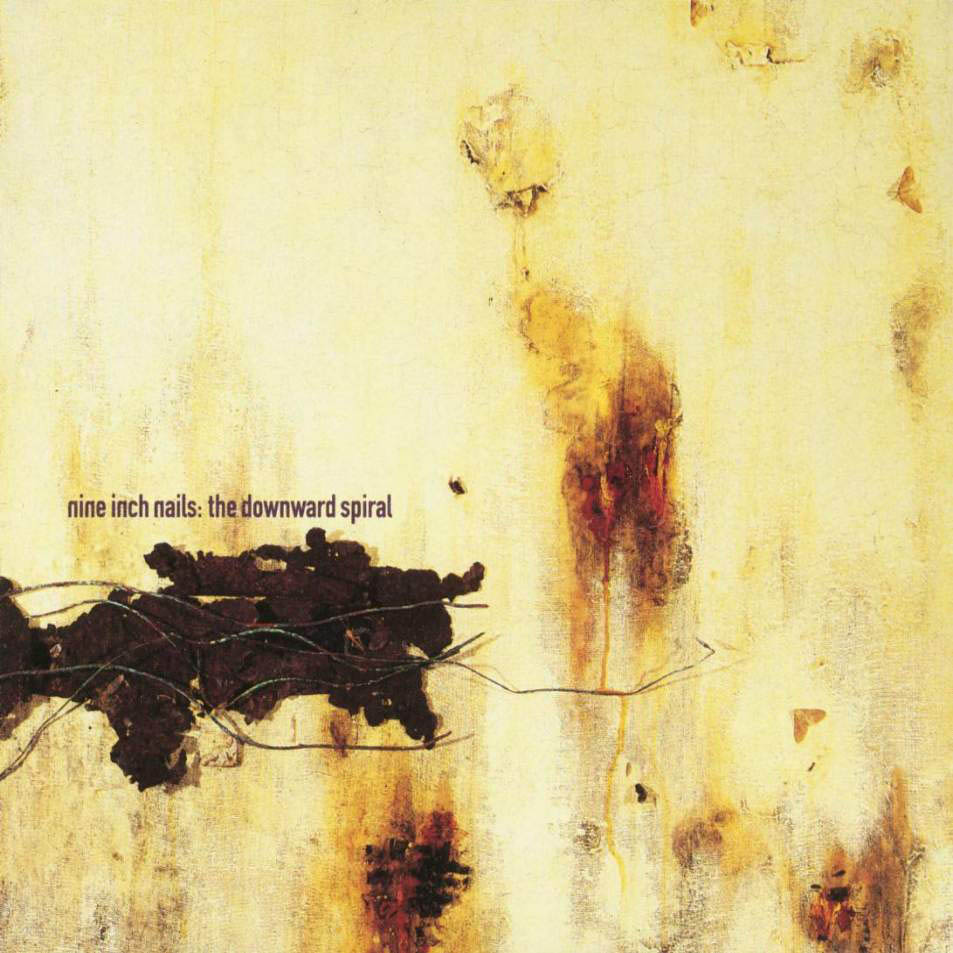
The Downward Spiral at 25


Trent Reznor's Nine Inch Nails, which is really just him and whoever he is working with at any given time, was well-known in the underground rock and industrial music world long before the spring of '94, but the release of the project's second full-length LP 25 years ago introduced a massive number of generations X and Y to passionate but heavy rock music that thoughtfully challenged religious institutions, society, and dealing with various forms of mental and emotional anguish. Sure, the music is dark, loud, and mostly comes across sounding depressing, but what is the point and purpose of using those tones and moods in any artistic creation? Attempting to represent or reflect the saddest, rawest, and most personal of all hurt feelings and injustices in the world would probably result in some pretty dark and depressing stories, paintings, or poems as well.

What sets Nine Inch Nails, and this LP, specifically, apart from something more along the lines of death metal, black metal, or even heavier goth-industrial acts like Skinny Puppy or Reznor's friends, Ministry, is the desire to present this type of gothic-industrial rock music as though it is prog-rock instead, which ends up coming across as something different than both of those sub-genres. What if Bauhaus had tried to make a Genesis album? Guest appearances from King Crimson's Adrian Belew, super-producer, Flood, and even a bit of programming assistance from Motley Crue's Tommy Lee show both the range of Reznor's influences and the large musical reach to attract fans of various styles of rock music, and everyone from Marilyn Manson to the emo to screamo bands owes quite a bit to what Reznor accomplished on this album.

"Mr. Self-Destruct" sets the tone for the album, which is a loose concept record about the descent of a character into suicidal madness triggered by a variety of emotional burdens and heavy thoughts, which itself is a nod to at least two of Pink Floyd's classic LPs. The aggressive assault of the song cuts into a collage of guitar flurry which then dynamically changes to one of the album's quietest and creepiest songs, "Piggy." Along with the lead single, the seriously-rocking mosh pit anthem, "March of the Pigs," it is worth noting that much of this album was recorded in Trent's residence of that era, which happened to be the former home of Charles Manson Family murder victim, Sharon Tate. Reznor has since discussed how he chose to move out of the house shortly after a personal conversation with Tate's sister, but this was after the recording had finished, which lends another layer of genuine fear-factor to the album. This was all in a time where rumor traveled by word-of-mouth and verification was difficult prior to wide-scale internet access, though that was just around the corner.

"Heresy" is at least up-front about its lyrical subject matter, mostly paraphrasing some of Nietzsche's quotes and thoughts that are certain to rile up suburban parents a lot more than philosophy students. The biggest hit from the album, and arguably of the entire Nine Inch Nails catalog, is "Closer," a pulsing, electronic, sexual confession that is bent and twisted by guitar loops and noise samples that cross-fade from one speaker to the other and then out of the mix completely throughout the song. This track was undoubtedly popularized also by its savage, nightmare-inducing music video, a collaboration between Reznor and director Mark Pellington, which was a gnarly view, even in its edited-for-broadcast MTV version. (If you've not seen the director's cut, take a moment and hop over to youtube. I'll wait for you.)

Crazy, right? For this sort of music to have any sort of pop success in the mid-‘90s, or any era, is hard to believe, and yet, it led to the even greater pop success of Reznor’s protégé, Marilyn Manson, who would take the concept of shock rock to amazing new extremes only two years after The Downward Spiral, among other copy-cat acts and one hit wonders that dabbled in industrial and electronic elements in the mid and late ‘90s.

The album's second half focuses more on the rising action and climax of the story line through the hypnotic "The Becoming" and progressing with "The Eraser," "Reptile," and concludes with another of Reznor's most recognizable songs, the mournful ballad, "Hurt," later introduced to entirely different audiences by Johnny Cash's unforgettable 2003 cover version. After a successful world-tour that lasted nearly two years and included an infamous, mud-caked appearance at the Woodstock '94 festival, Nine Inch Nails had essentially become a house-hold name compared to the project's previous years when they were only known in indie or alternative music circles. Like any culturally-influential artist or figure, Reznor's style has been imitated and parodied many times over since The Downward Spiral's release and success, but it all really started, at least on a grand scale, with this album. While there have been many other great NIN songs and albums in the succeeding years, including their most recent releases, (the NIN EP trilogy), most would agree this collection of songs is their best work.

******************

OTHER ALBUMS Celebrating 25 Years:
Failure-Magnified
Green Jelly-333
Kyuss-Welcome to Sky Valley
L7-Hungry for Stink
Pantera-Far Beyond Driven